
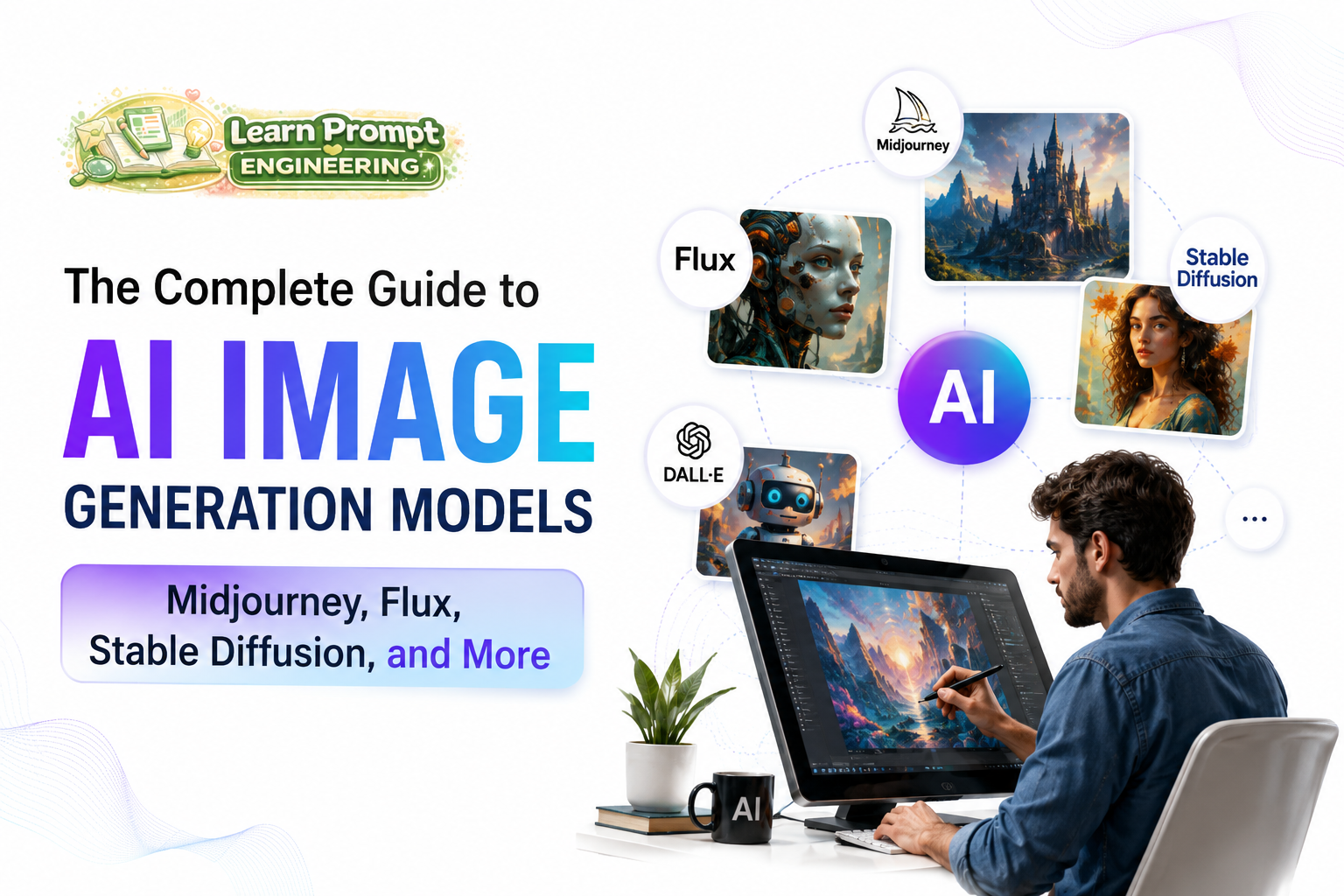
AI image generation has transformed digital creativity. With multiple powerful models available, understanding their strengths, weaknesses, and ideal use cases is essential for achieving the best results. This complete guide explores the leading AI image generation models in 2026.
Overview of Major AI Image Generation Models
1. Midjourney
Midjourney remains one of the most popular and artistic AI image generators. It excels at creating highly stylized, artistic, and imaginative images with strong aesthetic quality.
Strengths: Exceptional artistic style, creative interpretation, strong community, excellent composition.
Weaknesses: Less precise for photorealistic portraits, subscription-based access through Discord.
Best For: Concept art, fantasy illustrations, cinematic scenes, and creative artwork.
2. Flux (by Black Forest Labs)
Flux is known for outstanding prompt adherence, high-quality photorealism, and excellent text generation within images.
Strengths: Superior prompt understanding, realistic anatomy and details, fast generation, strong text rendering.
Weaknesses: May require more specific prompting for highly artistic styles.
Best For: Photorealistic images, product visualization, accurate scene rendering, and text-heavy designs.
3. Stable Diffusion
Stable Diffusion is an open-source model family that offers unmatched flexibility and customization.
Strengths: Highly customizable, local installation possible, vast ecosystem of fine-tuned models and LoRAs, free to use locally.
Weaknesses: Requires technical knowledge for best results, hardware demands for local use.
Best For: Advanced users, custom model training, consistent character generation, and privacy-focused work.
Other Notable Models
DALL·E 3 (OpenAI)
Integrated into ChatGPT, DALL·E 3 offers excellent prompt understanding and safety features.
Best For: Quick creative concepts, safe content generation, and users already in the OpenAI ecosystem.
Grok Image Generation (xAI)
Grok’s image model (powered by Flux architecture) provides fast, high-quality results with fewer restrictions.
Leonardo.AI and Ideogram
These platforms offer specialized features for game assets, character consistency, and strong text integration.
Comparison Table
| Model | Strength | Prompt Adherence | Photorealism | Artistic Quality | Accessibility |
|---|---|---|---|---|---|
| Midjourney | Artistic Style | Good | Good | Excellent | Discord Subscription |
| Flux | Prompt Accuracy | Excellent | Excellent | Very Good | Various Platforms |
| Stable Diffusion | Customization | Very Good | Very Good | Good | Free / Local |
Choosing the Right Model
- For Artistic & Cinematic Work: Midjourney
- For Photorealism & Accuracy: Flux
- For Customization & Control: Stable Diffusion
- For Quick Concepts: DALL·E 3 or Grok
Best Practices for Any AI Image Model
- Write detailed, structured prompts.
- Use both positive and negative prompts effectively.
- Specify lighting, composition, and quality parameters.
- Experiment with different models for the same concept.
- Learn model-specific prompting styles.
Future Trends in AI Image Generation
As of 2026, we see rapid improvements in prompt adherence, speed, consistency of characters, video generation integration, and reduced computational requirements. Open-source models continue to close the gap with proprietary systems.
Conclusion
Each AI image generation model offers unique strengths. Understanding these differences allows you to select the right tool for your specific creative needs. By combining model knowledge with strong prompt engineering skills, you can achieve professional, consistent, and impressive visual results.
Experiment with multiple platforms, analyze their outputs, and develop a workflow that leverages the best model for each project type.
This complete guide contains approximately 980 words and provides an up-to-date overview of leading AI image generation models.